Dishwasher Not Cleaning Dishes? Troubleshooting Steps
TL;DR
- Most dishwasher cleaning problems stem from clogged filters, blocked spray arms, or hard water buildup — all fixable issues
- Check the filter first (clean every 1–2 weeks), then inspect spray arms for blockages and verify the water inlet valve is working
- Hard water is a major issue in Central Texas; use rinse aid and descale monthly to prevent mineral deposits
- DIY fixes include filter cleaning, spray arm clearing, and proper detergent use; call a pro for pump, motor, or control board issues
- Always shut off water supply and unplug the unit before any inspection or repair work
When your dishwasher not cleaning dishes properly becomes a daily frustration, you're not alone — it's one of the most common calls we get at The Appliance Family. The good news is that most cleaning problems have straightforward causes and solutions, and many you can troubleshoot yourself before calling in a technician.
From Our Truck This Week
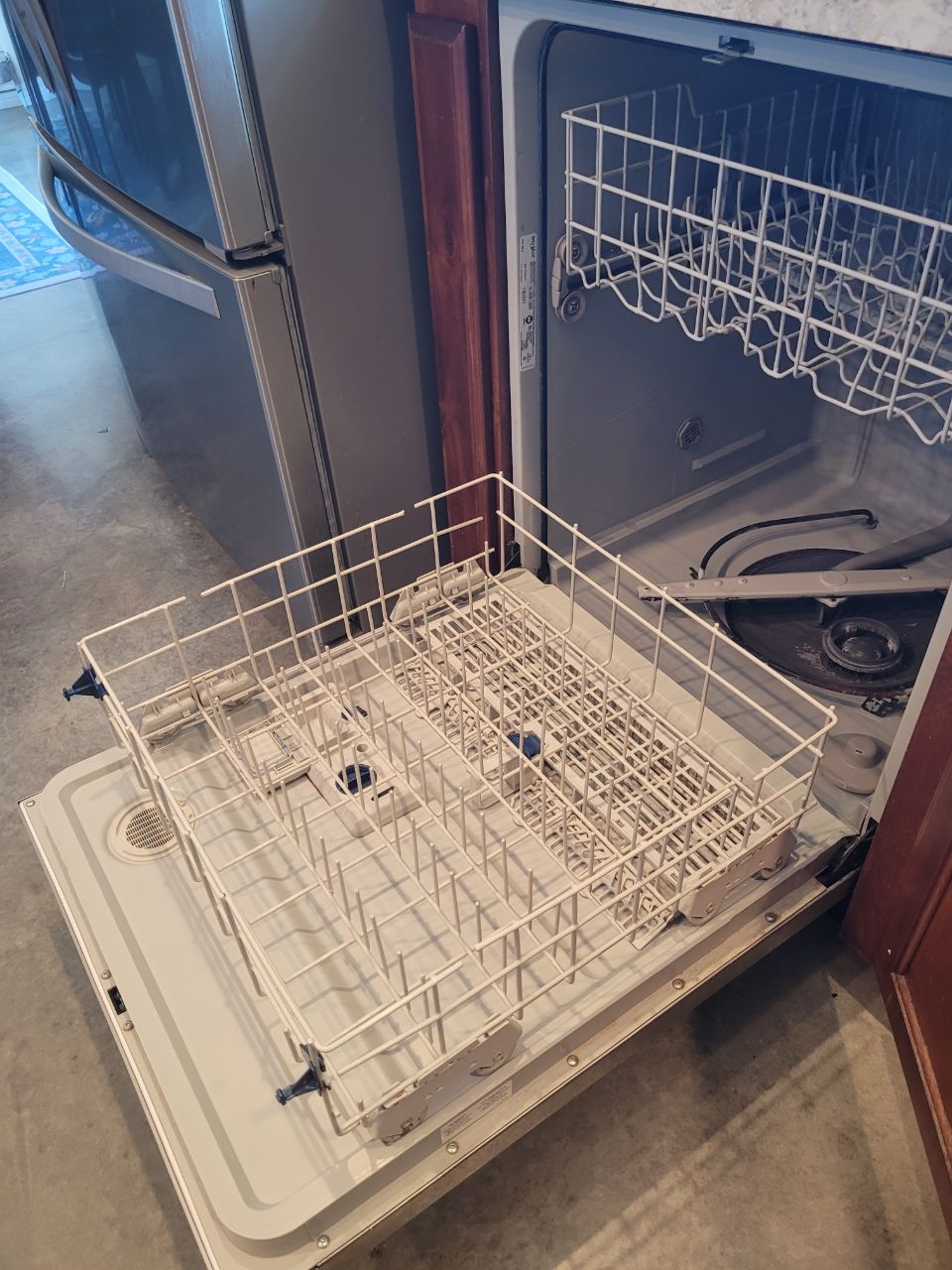
We had two service calls this week that perfectly illustrate the most common dishwasher cleaning complaints. Our technician pulled the racks and spray arms to inspect the wash system on a unit in Georgetown that was leaving food particles on every load. The culprit? A completely clogged filter the homeowner didn't know existed, combined with mineral buildup blocking half the spray arm holes — classic Central Texas hard water issues.
The Most Common Causes of Poor Dishwasher Cleaning
Clogged or Dirty Filter
The filter is your dishwasher's first line of defense, catching food particles before they recirculate onto your dishes. When it clogs, water flow drops dramatically and debris has nowhere to go but back onto your plates and glasses. Most modern dishwashers have a removable cylindrical filter at the bottom of the tub that twists or lifts out. If you've never cleaned yours, that's almost certainly your problem. Rinse it under warm water and use a soft brush to clear trapped debris every 1–2 weeks for optimal performance.
Blocked Spray Arms
Spray arms distribute water throughout the dishwasher, and when their tiny holes get blocked with food particles or mineral deposits, entire sections of the tub don't get adequate water coverage. Remove both the upper and lower spray arms (they usually just lift or twist off) and hold them up to the light. If you can't see through every hole, use a toothpick or small wire to clear the blockages. In Central Texas, hard water mineral buildup is the usual suspect here.
Hard Water Mineral Buildup
Austin and Central Texas have some of the hardest water in the country, with high calcium and magnesium content that leaves white film on dishes and scale buildup inside your dishwasher. According to the EPA, hard water reduces appliance efficiency and lifespan. You'll notice cloudy glassware, white spots on dishes, and reduced cleaning power. Regular descaling with a dishwasher cleaner or white vinegar helps, and using a rinse aid is essential in our area.
Insufficient Water Temperature
Dishwashers need water at 120–150°F to dissolve detergent properly and break down grease. According to Consumer Reports, water temperature directly affects cleaning performance. If your water heater is set too low or the dishwasher's internal heating element has failed, cleaning performance suffers noticeably. Run your kitchen faucet until the water is hot before starting a cycle to give the dishwasher a head start.
Step-by-Step Dishwasher Troubleshooting Checklist
Follow these diagnostic steps in order to identify and resolve most dishwasher cleaning problems. Always shut off the water supply at the valve before troubleshooting, and unplug the unit if you're inspecting internal components.
- Clean the filter thoroughly: Remove, rinse, and scrub the filter with warm water and a soft brush. Check the filter housing area for debris. This solves about 40% of cleaning complaints we see.
- Inspect and clear spray arms: Remove upper and lower spray arms. Check every hole for blockages and clear with a toothpick. Spin the arms by hand when reinstalled to verify they rotate freely.
- Check water inlet valve and supply: Run your kitchen faucet to confirm good water pressure. Inspect the water inlet valve screen (usually behind the lower kickplate) for debris or mineral buildup that restricts flow.
- Verify proper detergent use: Use fresh detergent (pods and powder lose effectiveness over time) and reduce the amount if you see excess suds. Too much detergent leaves residue; too little doesn't clean effectively.
- Test the heating element: Run a cycle and carefully feel the dishes mid-cycle (if safe to pause). If water isn't hot, the heating element or thermostat may have failed.
- Examine the door gasket and latch: A door that doesn't seal properly allows water and heat to escape, reducing cleaning power. Check for gaps, tears, or a worn gasket.
- Run a cleaning cycle: Use a dishwasher cleaner or place a cup of white vinegar on the top rack and run a hot empty cycle to dissolve mineral deposits and grease buildup throughout the system.
Loading and Detergent Best Practices
Proper loading technique and detergent selection directly impact cleaning performance. Don't overload the racks — dishes need space for water and detergent to reach all surfaces. Angle bowls and cups downward so water doesn't pool. Place the dirtiest items facing the spray arms. Avoid blocking the detergent dispenser with large pots or pans.
Use the right detergent for your water hardness; Central Texas residents benefit from detergents formulated for hard water. Fresh detergent matters — pods and powder lose effectiveness after about a year, and if your detergent has clumped or caked, it won't dissolve properly.
Rinse Aid Is Essential in Central Texas
Rinse aid isn't optional in hard water areas like Austin — it's a necessity. It helps water sheet off dishes instead of forming droplets that dry into spots and film. Keep your rinse aid dispenser filled and adjust the setting to the higher end of the range. You'll see immediate improvement in drying performance and spot reduction.
When to Call a Pro vs. DIY
Many dishwasher cleaning issues are straightforward DIY fixes, but some problems require the tools, parts, and expertise of a professional appliance technician. Knowing which is which saves you time, frustration, and potential damage from attempting repairs beyond your skill level.
Safe DIY tasks: Cleaning the filter and spray arms, clearing minor blockages, running descaling cycles, adjusting detergent and rinse aid use, checking and cleaning the door gasket, and verifying proper loading technique are all within reach of most homeowners.
Call a professional for: Wash pump replacement or repair, motor issues, control board diagnostics and replacement, water inlet valve replacement, heating element replacement, drain pump problems, and any situation where you're unsure about electrical connections. At The Appliance Family, we also recommend professional service when you've tried the basic troubleshooting steps and the dishwasher still isn't cleaning.
Our technicians throughout Austin, Round Rock, Cedar Park, Pflugerville, Georgetown, Leander, Kyle, Buda, Lakeway, and Bee Cave carry the parts and tools to complete most dishwasher repairs same-day. Repair costs generally range from $150–$400 depending on the part and labor involved.
Hard Water Solutions for Central Texas Dishwashers
Hard water deserves special attention in our service area because it's the underlying cause of so many dishwasher complaints in Austin and Central Texas. The white film and spots on your glassware are calcium and magnesium deposits that remain after the water evaporates. Over time, these minerals also coat the interior components of your dishwasher, reducing efficiency and lifespan.
Monthly descaling helps manage the buildup — run an empty hot cycle with two cups of white vinegar or a commercial descaling product. For severe buildup, you may need to remove spray arms and soak them overnight in a vinegar solution. A whole-home water softener is the permanent solution if you're serious about protecting your dishwasher and other appliances. According to the U.S. Department of Energy, appliances last longer and perform better with softened water.
Frequently Asked Questions
Why is my dishwasher leaving food particles on dishes?
Food particles left on dishes usually indicate a clogged filter, blocked spray arms, or a failing wash pump. The filter catches debris and should be cleaned every 1–2 weeks. Spray arm holes can become blocked with food or mineral deposits. If the wash pump is weak or damaged, water pressure drops and dishes don't get clean even with a clean filter.
How often should I clean my dishwasher filter?
Clean your dishwasher filter every 1–2 weeks for best performance, or weekly if you run it daily. The filter is usually located at the bottom of the tub and twists or lifts out. Rinse it under warm water and use a soft brush to remove trapped food particles. A clogged filter is the single most common cause of poor cleaning performance.
Can hard water cause my dishwasher to stop cleaning well?
Yes, hard water is a major culprit in Central Texas dishwasher performance issues. Mineral deposits build up on spray arms, heating elements, and internal components, reducing water flow and cleaning power. You'll often see white film on dishes and glassware. Regular descaling with dishwasher cleaner or vinegar helps, and a whole-home water softener prevents the problem at the source.
Why do my dishes come out cloudy or with white residue?
Cloudy dishes or white film usually comes from hard water mineral deposits or too much detergent. Austin and Central Texas have very hard water, which leaves calcium and lime on glassware. Try reducing detergent by half, use a rinse aid, and run a cleaning cycle with white vinegar. If the cloudiness is etching rather than film, the glass is permanently damaged from overly aggressive detergent.
When should I replace my dishwasher instead of repairing it?
Consider replacement if your dishwasher is over 10 years old and needs a major repair like a new pump, control board, or tub. Repair costs over half the price of a new unit usually don't make financial sense. However, many common issues like clogged spray arms, bad door latches, or detergent dispensers are inexpensive fixes that extend the life of a perfectly good machine.
Get Expert Dishwasher Repair in Austin and Central Texas
If you've worked through these troubleshooting steps and your dishwasher still isn't cleaning properly, it's time to bring in professional diagnostics. The Appliance Family has been serving homeowners throughout Austin, Round Rock, Cedar Park, Pflugerville, Georgetown, Leander, Kyle, Buda, Lakeway, and Bee Cave with honest, expert appliance repair. Our technicians carry common parts on their trucks and can complete many repairs the same day, getting your dishwasher back to peak performance quickly. Learn more about our family-owned business and our commitment to Central Texas homeowners. Call us at (512) 934-2240 or visit our contact page to schedule a service call today.
Need a hand with your appliance?
Same-day appliance repair and installation across the Austin area.